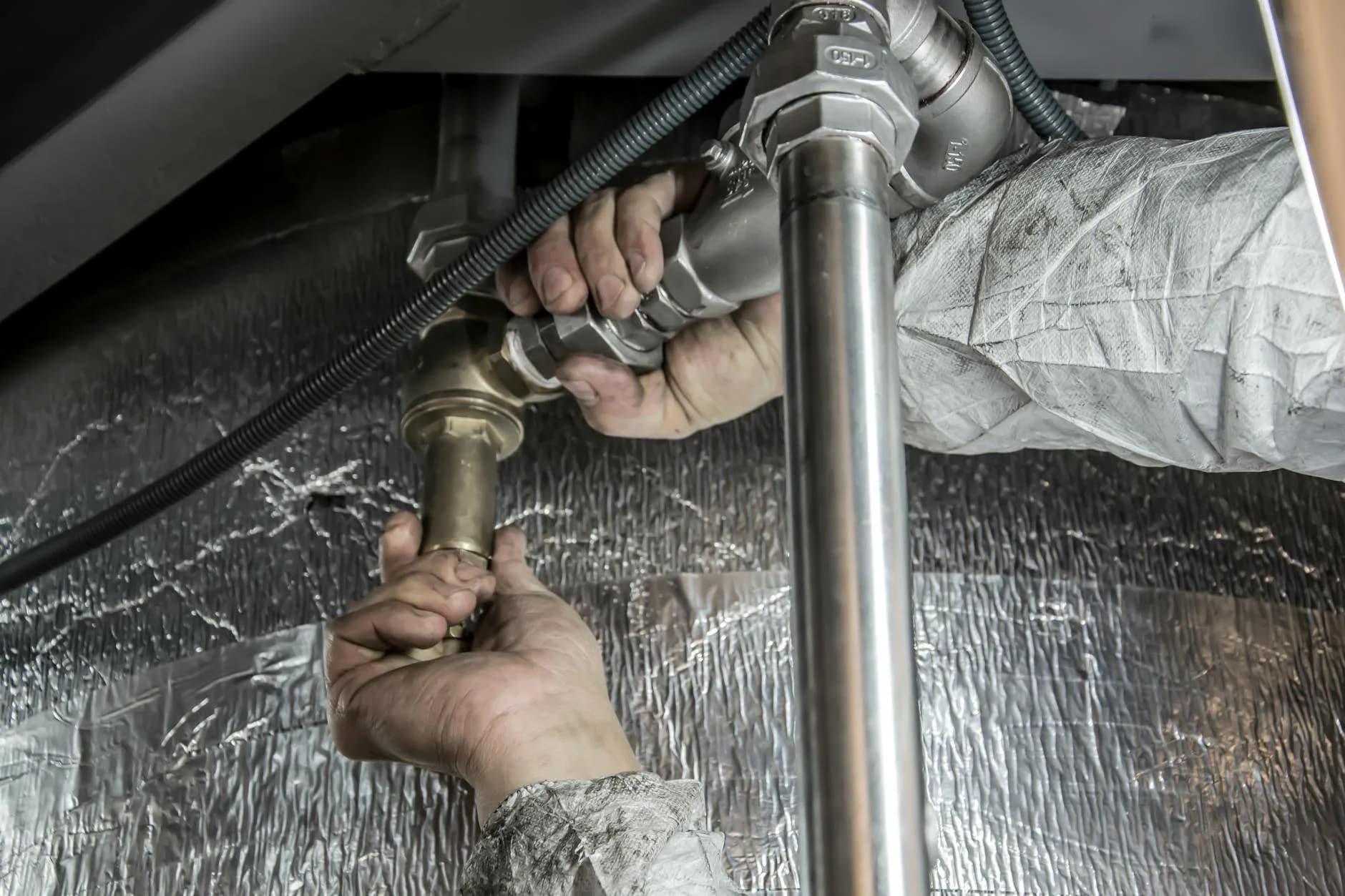
12-week workforce pathway: EPA 608 Universal, OSHA 10, residential HVAC certification, and employer placement.
Program overview, expectations, funding orientation, and career pathways in HVAC.
Program structure, schedule, credentials earned, and career outlook
Understanding workforce funding, attendance requirements, and available support
Residential, commercial, industrial HVAC — career progression from apprentice to master
Confirm understanding of program requirements and expectations
Core principles of heating, ventilation, and air conditioning. Tool identification and safety protocols.
Heating cycle, cooling cycle, ventilation, and air distribution basics
Gauges, manifolds, vacuum pumps, recovery machines, hand tools, and meters
Personal protective equipment, electrical safety, refrigerant safety, and lockout/tagout
Identify compressor, condenser, evaporator, metering device, and airflow components
Test knowledge of HVAC principles, components, and safety
Electrical theory, wiring, schematics, and meter usage for HVAC systems.
Fundamental electrical concepts every HVAC tech must know
Ladder diagrams, pictorial diagrams, and schematic symbols
Hands-on practice measuring voltage, amperage, resistance, and capacitance
How electrical components control HVAC system operation
Assessment of electrical fundamentals for HVAC
Gas furnaces, electric heat, heat pumps, and combustion analysis.
Gas valve, ignition systems, heat exchangers, blower operation, and safety controls
Sequencers, heating elements, and electric furnace operation
Reversing valve, defrost cycle, auxiliary heat, and balance point
CO testing, draft measurement, gas pressure checks, and temperature rise
Complete furnace inspection, tune-up, and safety check procedure
Test knowledge of heating system operation and maintenance
Air conditioning fundamentals, the refrigeration cycle, and system components.
Compression, condensation, expansion, evaporation — the four stages explained
PT charts, saturation, superheat, and subcooling — the foundation of HVAC diagnostics
Reciprocating, scroll, and rotary compressors
TXV, fixed orifice, capillary tube — how each controls refrigerant flow
Measure and calculate superheat and subcooling on a live system using gauge manifold and thermometer
Test knowledge of refrigeration cycle and AC system operation
Ozone depletion, Clean Air Act, refrigerant safety, and recovery requirements. Required for all EPA 608 certification types.
How CFCs and HCFCs deplete the ozone layer, Montreal Protocol, and phase-out schedules
Federal regulations on refrigerant handling, venting prohibition, and penalties
Toxicity, flammability, oxygen displacement, frostbite, and cylinder safety
CFC, HCFC, HFC, HFO refrigerants — R-22, R-410A, R-134a, R-404A, and their properties
Saturation temperature, gauge vs absolute pressure, and PT chart usage
Definitions, equipment requirements, and when each is required by law
Who can purchase refrigerant, record-keeping requirements, and certification verification
25-question practice test matching EPA 608 Core exam format and difficulty
Recovery requirements for systems with less than 5 lbs of refrigerant. Window units, PTACs, refrigerators, freezers.
Window AC, PTAC, household refrigerators, vending machines, and water coolers
90% recovery for systems with operating charge, 80% for non-operating, and when 0% applies
System-dependent vs self-contained recovery, equipment certification, and procedures
Small appliance leak repair requirements and disposal procedures
25-question practice test matching EPA 608 Type I exam format
Recovery and service for high-pressure AC and refrigeration systems. R-22, R-410A, R-134a systems.
Residential AC, commercial refrigeration, heat pumps, and automotive AC systems
Required recovery levels: 0 psig for systems <200 lbs, 10 inches Hg vacuum for >200 lbs
Electronic leak detectors, UV dye, soap bubbles, standing pressure test, and nitrogen
Vacuum pump operation, micron gauge, triple evacuation, and dehydration
Comfort cooling 10% leak rate trigger, commercial 20%, mandatory repair timelines
Hands-on refrigerant recovery from a high-pressure system using certified equipment
25-question practice test matching EPA 608 Type II exam format
Chillers and low-pressure refrigeration systems. R-11, R-123, and centrifugal systems.
Centrifugal chillers, R-11, R-123 systems, and how they differ from high-pressure
Required recovery levels: 0 psig for systems <200 lbs, 25 mm Hg absolute for systems >=200 lbs
Why low-pressure systems operate in vacuum, purge unit function, and leak prevention
Freeze-up risks, hydrolysis, acid formation, and dehydration procedures
Safety devices on low-pressure systems and when they activate
25-question practice test matching EPA 608 Type III exam format
Comprehensive review and timed practice exams covering all four EPA 608 sections.
Quick review of key Core concepts, common exam traps, and memory aids
Side-by-side comparison of recovery requirements, leak rates, and equipment rules
Timed 25-question Core practice exam under test conditions
Timed 25-question Type I practice exam under test conditions
Timed 25-question Type II practice exam under test conditions
Timed 25-question Type III practice exam under test conditions
Complete 100-question timed practice exam — all 4 sections combined. Pass = 70% per section.
Hands-on refrigerant recovery, charging, leak detection, and system diagnostics.
Subcooling method, superheat method, weigh-in method, and manufacturer specifications
Reading manifold gauges, identifying overcharge, undercharge, restrictions, and non-condensables
Practice electronic leak detection, nitrogen pressure test, and standing vacuum test
Recover refrigerant, pull vacuum to 500 microns, and charge system to spec
Diagnose system problems from gauge readings and symptoms
Static pressure measurement, duct sizing, brazing, and system commissioning.
Supply, return, duct sizing, static pressure measurement, and airflow restrictions
Heat load calculation concepts, equipment selection, and matching indoor/outdoor units
Hands-on brazing copper tubing with nitrogen purge, pressure testing joints
Measure, cut, flare, and connect refrigerant line sets
Complete startup: vacuum, charge, airflow verification, temperature split, and commissioning checklist
Test knowledge of installation procedures and best practices
Systematic troubleshooting, common failures, and customer communication.
Step-by-step approach: verify complaint, gather data, isolate, test, repair, verify
Bad capacitor, failed compressor, frozen coil, dirty condenser, low charge, restriction
Ignition failure, cracked heat exchanger, bad gas valve, thermostat issues, blower problems
Diagnose and repair multiple system faults on training equipment
Role-play service call: explain findings, present estimate, handle objections
Diagnose system problems from described symptoms and readings
30-hour OSHA construction safety course. Fall protection, electrical safety, PPE, and hazard communication.
OSHA standards, worker rights, employer responsibilities — delivered through CareerSafe online platform
Ladder safety, scaffolding, guardrails, personal fall arrest systems
Lockout/tagout, arc flash, ground fault protection, and safe work practices
GHS labels, Safety Data Sheets, chemical hazards, and right-to-know
Hard hats, safety glasses, gloves, respirators, and hearing protection
Permit-required confined spaces, atmospheric testing, and trench safety
Hot work permits, fire extinguisher types, and brazing safety for HVAC
CareerSafe proctored OSHA 10 assessment — DOL card issued upon passing
CPR/AED/First Aid certification through CareerSafe and NRF Rise Up Retail Industry Fundamentals.
Chest compressions, rescue breathing, AED operation for adults
Bleeding control, shock, burns, heat/cold emergencies, and when to call 911
Hands-on CPR and AED practice on manikins — must demonstrate competency
NRF Retail Industry Fundamentals: customer service, selling, and workplace skills
NRF Rise Up certification exam
Proctored EPA 608 Universal exam, resume, mock interview, and employer placement.
Official EPA 608 Universal certification exam — 100 questions, 4 sections, proctored
Build a trade-specific resume highlighting certifications, skills, and training hours
Common HVAC interview questions, how to discuss certifications, and salary negotiation
15-minute mock interview evaluated on professionalism, technical knowledge, and communication
Verify all certifications earned, hours logged, and placement readiness
16 modules · 94 lessons · 12 weeks